MARTIAL ART TRAIN WITHOUT PAIN
By Deb Russell
Every martial artist, regardless of their style, is prone to injury. Most common martial art injuries can be avoided with correct training and are usually due to insufficient warm-up, improper stretching, and poor technique.
This article is intended to offer immediate guidance in order to prevent and alleviate pain and discomfort due to common injuries and is in no way a substitute for an examination by a qualified health professional. Often simple injuries if not immediately diagnosed can turn into serious injuries and visa versa. So remember that a delay in diagnosis can prolong healing and may lead to permanent damage.
As a martial artist you should extend your knowledge beyond your art and into the area of physical fitness training and body mechanics. Many traditional warm-up exercises and stretch routines are archaic, physically damaging and very counter productive to martial arts training. Lack of flexibility due to inefficient warm up and stretching is the main cause of poor physical performance as well as a reason for many strains and tear injuries. You should also aim to incorporate flexibility, strength and endurance conditioning into your martial art training.
Warm Up
Begin with a simple exercise that will gradually get the heart pumping and increase blood flow to your muscles. You need to raise the body's temperature by about 2º F, loosening and warming muscles and joints. You can tell when you are sufficiently warmed up when you begin to break a slight sweat.
- Muscles are able to stretch more easily and to contract more rapidly when warm. The faster muscle contracts, the stronger it becomes.
- The higher the temperature of muscle cells, the faster they are able to metabolize the oxygen and fuel they need.
- As muscles warm, the response to nerve impulses quickens, causing a faster contraction, which leads to quicker reflexes.
- Warming joints lubricates them, allowing them to move more freely with less energy expended. This protects the joints from excessive wear and tear.
- Warming up gradually increases the heart rate and prevents abnormal heart rhythms. Any sudden strenuous exercise can cause the heart to demand more oxygen than the circulatory system can provide, resulting in a strain on the heart.
Purpose of stretching:
(1) Reduce muscle tension
(2) Increase the movement of joints and muscles so that the body can work more efficiently
(3) Prevent muscle soreness and muscle tears
(4) Prevent muscle inflammation and facilitate recovery from soft tissue injuries
(5) Improve exercise technique by extending the range of motion
(6) Lengthen the muscle after use
Whenever a muscle is stretched, the stretch reflex action automatically contracts the stretch muscle, in order to protect it from being over stretched. Bouncing, or ballistic stretching, does more damage than not stretching at all. During each bounce, the muscle shortens which is the opposite result of what you are trying to achieve.
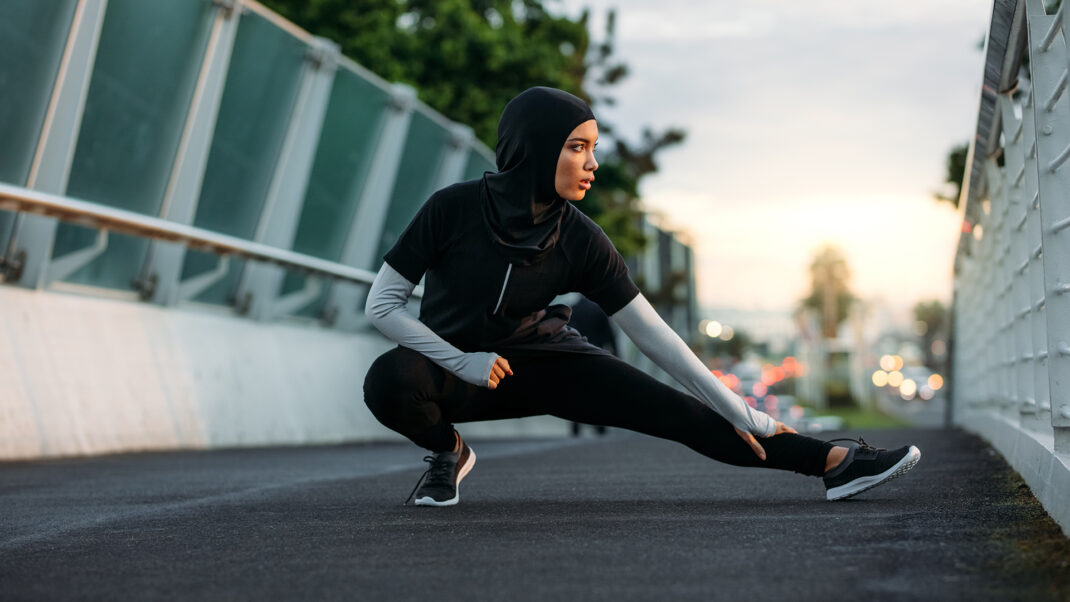
The muscle responds by lengthening slowly as in performing a static stretch. Hold the stretch still for a minimum of 20 seconds. Stretches should be slow, gentle and not forced. The stretches you choose should be related to the kind and type of activity you are going to perform. Stretch daily if you wish to increase your flexibility.
Remember not to compete during stretching exercises. You should not compare your progress to that of another person if you're in class. Stretching beyond your limits can lead to injury and loss of any gains you will have made. You should always alternate your stretches from one muscle group to another, ensuring that they are progressive. If you are an exceptionally flexible person, you should take a great deal of care not to stretch too far because there is also a danger of injury through dislocation.
Cool Down/Post Training Stretch
When we stretch correctly, most of our muscles are loose and flexible. As we train, we exert force on these joints and these muscles tense up and contract to protect the improper rotation of joints, and soon these muscles can be even tighter than before we began our initial stretch. This tightening of small motion joints is particularly important in our back. Whenever we kick the heavy bag in martial arts training our body's joints adjust to compensate for the force load. Vertebrae shift to take up the shock of our feet/legs striking the bag or when we train with weights.
The main reason we stretch should not only be to prevent injury but to enable us to gain flexibility and to restore the looseness of the muscles we have caused to tighten. The post exercise or a cool down stretch ensures this. The proper cool down is to gradually decrease the amount of physical activity but to continue to do enough to generate heat in the main muscles you had been using. You then allow those muscles that are already loose to contract slowly while you loosen up the contracted muscles. When we do not stretch out these muscles and ligaments, they naturally tend to shorten, and with time and age this eventually causes a decrease in flexibility!
Stretching facilitates recovery by regulating muscle tension, relieving muscle spasms and improving blood flow into your muscles.
Some martial artists are more prone to injury than others. Those that have weaker joints may require extra strengthening exercise to protect the ligaments in their joints. Those that are prone to muscle pulls and tears will need to work more diligently to ensure adequate warm-ups and thorough stretching. Prior injuries will weaken an area of the body and additional strengthening may be required. Some martial artists compete at high levels, which increases their chances of physical strain and injury.
Sore Muscles
As a martial artist, you may on occasion experience "delayed onset muscle soreness" (DOMS) a day or two after a strenuous training session. DOMS usually disappears by itself within a few days but mild exercise and hot baths may help relieve the soreness. The sensation of pain and soreness comes due to the pressure of localized edema (fluid retention) on nerve endings, not by the muscle damage itself or by the build up of lactic acid. Lactic acid is a by-product of anaerobic glycolysis (the conversion of glucose into pyruvate). If adequate oxygen is not available, lactic acid is produced and begins to accumulate in the muscles. Lactic acid is that "burning" felt in muscles during intense exercise. This muscle burn is the result of a change in muscular acidity. Only through proper training can you increase your aerobic capacity, which will produce less lactic acid. Fuel for muscle action comes from the deployment of fatty acids and glucose accompanied by oxygen. Glucose emanates from glycogen, which is stored muscle fuel derived from carbohydrates in your diet. If oxygen is lacking due to improper warm-up, then oxygen will be deficient, causing the muscles to get energy by converting glucose to lactic acid. Lactic acid is a waste product or toxin that causes muscle to fatigue and ultimately fail. You can reduce the lactic acid build up faster if you perform light exercise after an intense workout and continue to move slowly until your heart rate lessens.You can also optimize the recovery process by drinking lots of water and including a post workout snack that contains protein. During intense training you are utilizing your muscle glycogen stores and traumatizing your muscle cells. This trauma can lead to muscle soreness and the increased need to rebuild protein.
Muscle Pulls
A muscle pull is probably the most common martial arts injury next to getting a bruise. Inevitably during the course of your training, although you have stretched properly, you may still pull a muscle from overuse, fatigue, or injury. What exactly happens when you pull a muscle? A muscle pull occurs when a sudden, severe force is applied to the muscle and the fibers are stretched beyond their capacity. If most of the fibers are over-stretched and just a few are torn, you have a muscle pull. If many of the fibers are torn, then it becomes a muscle tear.
The treatment for a muscle pull or tear is to apply ice. This relaxes the muscle and helps relieve any spasm. Apply ice to the injured body part and rest it until the pain and swelling reduce. You should apply the ice for about 20 minutes at a time for several days to reduce inflammation. Then you can start stretching the body part gently. It is very important to stretch the muscle while it heals. A pulled muscle usually goes into spasm, which is its protective mechanism causing the stretched muscle fibers to contract. If these fibers are not gradually re-lengthened, the muscle will pull again upon use because it will have healed in a shortened state. If you stretch the healing muscle gently and gradually, you'll decrease your chances of re-injury. You can return to full training when you are able to stretch the injured body part without pain as far as you can stretch the healthy one on the other side of the body.
Muscle Spasms
Noticing pain days after training can be an indication that you have a delayed muscle spasm rather than torn muscle fibers. Most muscle injuries result in some degree of spasm or tightness. Some mild muscle "pulls" actually end up to be low-grade spasms. If you are not sure when the muscle began to hurt, you probably have not torn the muscle.
Pain killers or an anti-inflammatory taken as soon as possible after a muscle spasm starts, will help prevent torn muscles from going into spasm. Next follow a gradual exercise program that uses a combination of icing and stretching.
Apply ice to the muscle to numb it and then massage the muscle with the ice until it is numb.
Next, start moving the sore muscle until you begin to feel tightness or pain. When the pain disappears, hold the injured body part in that position for a 20-second static stretch. A few moments later, contract the muscle slowly but fully, and hold for about 5 seconds. This isometric contraction aids in the relaxation of the muscle. Now move the body part again until you feel tightness or pain. Hold the body part for 10 seconds and then contract the muscle for 5 seconds. Repeat the stretch and contraction again, and then stretch the muscle one last time. Let the body part rest naturally for 20 seconds and repeat the entire exercise. Re-numb the muscle between sessions if needed. This method of icing and stretching can also be used initially in muscle pulls and tears. Within two or three days, the dull ache of the muscle spasm will be partially relieved. Then you can gradually resume training.
Using a sports liniment also helps to relieve the aches and pains of training. Working it into muscles may help to relax the muscle and increase blood flow to the sore area.
Tiger Balm, a form of hot liniment, can also be used as a warm-up aid. Besides helping to relax tight muscles and increase blood circulation, it may shorten your warm-up time, particularly in cold weather. Applying after warm-down may help increase blood flow which will reduce the your chances of muscle soreness.
A proper warm-up raises the overall body temperature, not in one particular muscle group. Using a hot liniment such as Tiger balm can be viewed as a passive warm-up for one body part, say your hamstrings, but should not be used as a replacement for a proper warm-up routine prior to training. You can prevent sore muscles by warming up before you train and cool down afterward. Include at least a few minutes of movement with each of the major muscle groups; the calves, thighs, hips, back, abdomen, chest, and arms.
Several studies have found that taking anti-inflammatory drugs such as aspirin after exercise reduces muscle soreness and improves your range of motion a day or two later.
Aspirin kills pain and also reduces inflammation. It can have severe gastric-intestinal side effects, irritating the stomach and cause bleeding as well as ulcers. Aspirin can also interfere with the production of the coating that protects the stomach and intestine from stomach acid so use buffered or enteric-coated aspirin. Aspirin also interferes with blood clotting and should not be used for injuries in which the skin is broken and bleeding is evident.
Acetaminophen has the same pain-killing effects as aspirin for most people but does not have as much of an anti-inflammatory effect. They are less irritating to the stomach and have no anti-clotting effect.
Ibuprofen is the active ingredient in non-steroid anti-inflammatory agents. There are numerous products containing this ingredient and all have very strong anti-inflammatory and pain-relieving properties.
Do not to take aspirin along with anti-inflammatory agents. The two are chemically similar; adding one to the other could lead to a toxic reaction. So, for example, if you are taking ibuprofen for sore muscles and you get a headache, take acetaminophen instead of aspirin.
There are many natural pain relievers and injury prevention in supplement form.
- Bromelain, an enzyme derived from pineapple, picks up all the debris floating around your damaged muscle. When you overwork a muscle enough to cause pain, bits of muscle fiber actually break off. These tiny scraps of protein may clog the muscle and cause pain and inflammation. Because it's an enzyme, bromelain helps by breaking down these proteins and digesting them. Once the waste products are eliminated, pain and tightness go away.
- Ginger, a natural ibuprofen, is well known for its anti-inflammatory properties. Like bromelain, it also contains an enzyme that can break down protein. In ginger, this enzyme is zingibain. Ginger (500 mg) also contains anti-oxidants, which help neutralize the free-roaming, unstable molecules called free radicals that play a role in causing inflammation.
- Siberian Ginseng, an herb, helps the adrenal glands produce more stress hormones. These stress hormones help your body recover more quickly from the effects of strenuous or muscle straining exercise. Although you may have to take irregularly for a month before it begins to yield benefits, clinical studies do suggest that ginseng improves training performance.
- Anti-Oxidants, like supplements of vitamins C and E, should be taken regularly because your muscles tend to produce more free radicals when you exercise. A healthy supply of these nutrients will help minimize pain the day after your workout and will speed the healing process as your body rebuilds its muscle tissue.
In contact and fight-oriented styles there are likely to be more bumps and bruises as well as the more serious broken knuckles, toes etc. The martial artist must understand that the body can take extreme impact when extremely conditioned. It is the mindset to push the body to its physical limits. This is evident with board breaking. Given the choice not to break thereby avoiding injury, martial artists take the risk. The end result may be a successful break, which in their minds is well worth all their pain and injury.
REDUCE SWELLING
The universally known treatment of RICE stands for rest, ice, compression, and elevation. The combination of all four reduces swelling. Swelling occurs when blood and fluids leak into the injured area, which is most often a joint.
A swollen joint has limited function so it is best to keep your swelling down to a minimum. If you follow the RICE procedure you can prevent further swelling which will increase your recovery time.
- Resting the injury cuts down the circulation to the area. When small blood vessels are torn, movement of the extremity prevents them from sealing up. So to avoid further complications and bleeding keep the injured area still.
- Ice constricts blood vessels when first applied. Icing limits the bleeding into the affected area, which in turn reduces swelling. It also prevents further bleeding which can cause calcium deposits to form in an around injured area later on.
- Compressing the swollen area with an elastic bandage limits the area available for fluid to leak into making it difficult for fluid to leak into area. A bandage will also protect and support the injury. Do not keep it wrapped all the time especially not when sleeping.
- Elevating the damaged area will also decrease blood flow. The heart has to pump harder against gravity if the injured area is raised to a level higher than the heart helping accumulated fluid to flow away from the injured area.
Applying heat to an injury should be avoided. Direct heat will dilate the blood vessels around the injury, leading to more swelling, muscle spasm and increased pain.
If the injury does not improve in a day or so following the RICE treatment, have it checked out by a doctor, chiropractic physician or doctor of osteopathy. X-rays may be needed to check for bone fractures or severely torn soft tissues.
Some styles are more contact and fight-oriented and injuries seem to be more common and much more serious (broken nose, toes, ribs etc.) but the frequency of injury does not lessen the pain.
Recent research findings have indicated that the injury rate associated with martial arts is comparable to the risk of injury in contact sports like football and rugby, and higher than other popular sports such as running, racquetball, and tennis.
Similarly to those engaged in sports, we martial artists have an addiction. If we miss even one day of training, we feel it will put us behind schedule. We will not be ready in time for our next grading or competition. We must bear in mind that rest is also an important part of your training program and an injury prevention in itself. Rest helps your performance in the long run, while assisting the injury to heal.
If there is pain associated with an injury it is the body's way of telling you that there is something wrong. The pain is a protection device to prevent further damage. Obey your physical warning signs and don't ignore your injury until it becomes chronic. See you doctor or kinesiologist regularly.
Cardio kickboxing classes work to improve your overall fitness by combining aerobics drills, punching and kicking. They'll also teach you how to maximize the strength and potential of your movements.
Classes will teach you the differences between specific types of kicks and some basic tips to keep in mind to perfect your technique.
For starters, always lean in the opposite direction from which you're kicking – if you kick with your left leg for example, lean slightly to the right. Leaning to the opposite side will help offset the power of your kick and also allow you to deliver your kick with more force. The same applies for front kicks– when you kick to the front, lean back slightly.
Smart Kickboxing Moves
No matter what kind of strike you're performing in your cardio kickboxing classes, make sure to contract your abs while extending your leg to protect your lower back. In fact, it's a good idea to spend some extra time outside of class strengthening your abs so that you don't throw out your back with more difficult kicks.
Try to keep your core as tight and firm as possible, because these muscles will stabilize your body and prevent back injury. Contracting these muscles will also put you well on your way to achieving killer abs!
Another rule is to always look toward the direction of your kick. That way, you'll be able to watch the movement of your leg and make sure you're using correct form.
It's especially important to look behind you when you kick backwards – you don't want to knock down something (or someone) behind you! Another word of wisdom for the back kick is to lean forward as you execute the movement, but make sure not to arch your back.
Remember that using correct form during your kickboxing classes will start you on the path to achieving firm, toned abs. While kicking, don't forget to suck in your stomach and keep your core tight. Engage those abs!
A common mistake made in cardio kickboxing classes is confusing the roundhouse kick with the side kick. It is easy to confuse them because they are both movements in which you kick your leg out to the side, but the thing to remember is that the roundhouse kick is a circular kick, meaning that your leg will come around in an arc.
As you execute this movement, pivot slightly on your stabilizing foot and imagine slapping your target with your shoelaces.
During a side kick, by contrast, you should turn out the toes of your stabilizing foot while pivoting and instead of bringing your leg up and out in a circle, as you would for the roundhouse, push your leg forcefully in a straight line out to the side, keeping your foot flexed and striking with the heel. Bend the knee and retract the leg after the kick as if “punching” with your leg. All the power should come from your glutes, making the side kick a great tool for achieving firm buns.
Punching Techniques for Jiggle-Free Arms
There are several different punching techniques commonly used in typical kickboxing classes. One move used frequently is the hook punch, in which you raise your bended arm to shoulder level, bringing it parallel with the floor, before striking out. Many exercisers think that they need to wind up and use a lot of momentum to power their hook punch.
In reality, the amount of movement should be minimal. The best way to execute a hook punch in your kickboxing classes is to keep your arm stiff and strong. The effect of the punch should depend on the power of your arm, not on the momentum. Movement is primarily in the hips, so focus on turning the hip bone of the same side of your hook punch, into the bag.
Cardio kickboxing classes incorporate drills involving series of quick punches in succession such as the Tabata drill. This is where the arm toning comes into play – punching quickly and steadily is a great way to reduce arm jiggle! Just make sure to keep your arms strong throughout the duration of the punches – don't be sloppy and let them hang loose. Keeping your arm muscles contracted throughout the full range of motion will also reduce your chance of injuring your elbow. Another way to prevent getting hurt is to pivot in the direction of the punch. To pivot, turn your body slightly, bend your knees and lift your heel off the ground.
Holding your legs stiff and immobile while you punch can result in a knee injury. Keeping your knees pliable, however, will help your body absorb the force of your punches.
One more quick tip is to remember that the more punches you execute, the more toned your arms will be. Therefore, while alternating arms in a punching session, pull one arm back as you punch out with the other one. That way, you can fit one punch into each count and maximize the benefits on your arms. Hello tank top!
It's Not Just for Kicks: Reap the Many Healthy Rewards
Besides the amazing physical benefits you'll reap from cardio kickboxing classes, the sport will also help you become more appreciative of your body and its abilities. The sweaty cardio sprints and rigorous movements will do wonders for your psyche, while kicking and punching will make you feel powerful, strong and capable.
Practicing your kickboxing moves will also help you to get rid of any aggression and negative feelings that you accumulated during the day. In fact, you can even picture your source of stress – be it a nightmare boss or someone who cut you off on the freeway – while you execute your movements. FEEL FREE TO BRING IN A PICTURE AND TAPE IT TO YOUR BAG!
Imagine yourself delivering a fatal knock-out to everything negative in your life! Kickboxing classes will give you energy, pride and increased full-body fitness. The only things you'll leave behind? Anger, stress and at least 500 calories!