Home
The World's Largest Association
For Fitness & Wellness Professionals
  • Log In
Home » Karin Singleton's Blog

Karin Singleton's Blog

Please Note: The Chrome browser does not natively support RSS feeds. To subscribe, you will need to install a Chrome extension that provides support for RSS. You may find one here.
Wednesday, March 30, 2011 • Raleigh, NC 27612-3431

Fascia - More than Bubble-Wrap

By Karin Singleton

Even before I became a MELT instructor, I had an inkling that fascia, aka connective tissue, is something worth knowing more about. That’s what had prompted me to select sessions at the IDEA World Fitness Convention in 2009 that promised more insight. It was at that convention when I first encountered MELT (Myofascial Energetic Length Technique) and its creator, Sue Hitzman. I became an instructor for MELT the same year.

Since then, I have seen information about fascia more frequently and prominently, and not only because I am looking for it. The latest IDEA Fitness Magazine has a cover article called ‘Fascial Fitness’ by Thomas Myers; he is one of the first to study this in greater depth.

In this article, he calls the fascia the ‘Cinderella’ of body tissues as it had been overlooked for the longest time – much as you throw away the bubble-wrap. Except, it appears now more and more clearly, this ‘bubble-wrap’ has a rich inner life and contributes significantly to the functioning of the body.

In Europe, scientific conventions are dedicated to the fascia, and Sue Hitzman was in Munich, Germany, last year to present her creation of MELT as a practical application. While treatment modalities for connective tissue have been available in massage therapy and Rolfing, MELT is the first method to make it accessible to more participants because it teaches the SELF-TREATMENT.

It is exciting to be on the cutting edge of this development as it is beginning to emerge into the consciousness of a wider audience.

Monday, March 14, 2011 • Raleigh, NC 27612-3431

MELT for Golf

By Karin Singleton

A physical fitness program for golf must include flexibility, balance and core strengthening. Sounds like a perfect match for MELT.


Why stretch when you can MELT?


MELT (Myofascial Energetic Length Technique) is the only structured self-treatment technique for the connective tissue. Connective tissue is the limiting factor in flexibility, not the muscles themselves. When connective tissue is rehydrated using the specific MELT techniques, this limiting factor is properly addressed, and the MELTer notices an immediate improvement in range of motion.


Some basic MELT techniques should be in the exercise toolbox of every person. Those are decompression modalities for the neck and lower back as well as a mobilization for the mid-back.


The MELT Hand Treatment offers assistance with wrist flexibility and grip strength. The MELT Foot Treatment is ideal to improve balance and hamstring flexibility. It is also a powerful weapon in the fight against plantar fasciitis. 


Other MELT lengthening techniques address tightness in the hips and lower extremities as well as the shoulder girdle.


MELT Strength – a contradiction in terms?


Not really.


One of the MELT principles is to improve core strength, particularly in conjunction with a differentiation between the movements of the rib cage versus the pelvis. Being able to engage the core muscles is the first things you learn when you MELT.


There is an additional MELT segment, which teaches, in addition to the core muscles, stability in the hips and shoulder girdle. Improving those areas in terms of strength and timing creates a solid foundation.

Sunday, February 27, 2011 • Raleigh, NC 27612-3431

Water, Water Everywhere

By Karin Singleton

After I complete a MELT session, whether in a class or with a private client, I always encourage that the participant should drink plenty of water afterwards.


Why is that?


Picture a dry sponge; it is usually hard and only has some elasticity where it is moist. This is an analogy to dehydrated connective tissue.


In MELT we are teaching techniques that lengthen connective tissue and create fluid exchanges on a cellular level. Connective tissue can be dehydrated, and with all the lengthening, shearing, gliding and rinsing that we do during a MELT session, we are making good progress towards the reversal of this process. Drinking water afterwards is a way of assisting the body in the re-hydration process. It is just like keeping the sponge moist throughout.

Friday, February 18, 2011 • Raleigh, NC 27612-3431

Happy Feet - Happy People

By Karin Singleton

This week, I was at the store Foot Solutions in Cary, NC, and gave a MELT Foot Treatment demo. This store has a reputation for being able to help people with foot problems, and MELT is a perfect partner.

We had a full house, standing room only. I had brought my pink rollers as balance assistance during the foot treatment. After having rubbed and rolled and pressed and prodded, all participants were standing in front of me with a happy smile on their faces because their feet and their bodies felt better than before.

Foot problems are no laughing matter. When it hurts to put one foot in from of the other, it is not only the exercise regimen that suffers. It becomes a quality of life issue. While the MELT Foot Treatment is not a cure-all, it can vastly help with problems like plantar fasciitis and even improving sensation in cases of peripheral neuropathy. Usually, there is also an immediate improvement in hamstring flexibility as the connective tissue rehydration 'travels' up the lines. I had people tell me after the foot treatment alone that their backs were feeling better.

I love to demonstrate the MELT Foot Treatment because it is deeply gratifying to see people feeling better in a matter of a half hour. I can sense the atmosphere in the room becoming lighter, happier, and more hopeful.

Wednesday, January 26, 2011 • Raleigh, NC 27612-3431

Training from the inside out - stabilize first

By Karin Singleton

Strength training has become an essential component of any well-rounded exercise program, and yet it is also the one where problems, particularly to the lower back and the shoulders, are known to occur. I make the claim that this is avoidable if some concepts of stabilization are observed.


The human body as a building


The musculoskeletal system of the human body is an amazing construction. It may well be compared to a building; it has a foundation and essential structural elements that give it internal strength. The integrity of those structural elements constitutes the ‘health’ of the building. Once this structure is in place, the rest of the building is added on. However, what you can add for your final building depends on the strength of the foundation.


Let’s use an example: you want to install a 125-gallon aquarium in your living-room. When filled, it will weigh about 1400 lbs. Personally, I would make sure that the floor can support such weight. And if it cannot, I would do one of two things: 1) reinforce the floor properly so that it can carry such weight, or 2) settle for a smaller aquarium.


The building of a human body


The same concept applies to our human body. We all have a built-in foundation of stabilizing muscles and depend on their strength for healthy and pain-free movement.


When we engage in strength training, we are asking our body to do just a little bit more than it is used to, and the result is that we get stronger. The general recommendation is to increase the amount of resistance when the exercise begins to feel very easy, even if you increase the number of repetitions. The process works well but it sometimes happens that movement patterns sneak in ‘under the radar’. You may not even be consciously aware that you are engaging additional muscles. Those enlistments can easily go undetected because our bodies are great compensators. We may be flattering ourselves that we can handle more and more resistance, but the end result over time can be, at best, a faulty movement pattern, or, at worst, discomfort or even injury.


Start with good posture


Your body should be well aligned before you place any stress on it. Your spine has its natural curves, your shoulders are relaxed and your head rests with ease on top of your body and is not pushed forward.


If this is not the case, begin with exercises to bring your bodies into better alignment. Strengthen the core muscles (lower back and abdominals) and the stabilizing muscles of the shoulders. I can help you find the right exercises for you.


Become aware of ‘bad posture’ and make a conscious effort to correct it. Often enough, bad posture starts as a bad habit.


Train from the inside out – stabilize first


As you work out, become aware of the body parts that move and of those that stabilize. The following observations apply whether you use free weights or machines, and they apply to all exercises.


  1. Does your lower back arch as you move?
  2. Do you elevate your shoulders during the movement?
  3. Do you jot your chin forward?


If you answered ‘yes’ to any of these questions, you are probably using more resistance than your foundation can handle and your body is compensating. I suggest you do the following:


  1. Stand, sit or lie in good alignment.
  2. Use a weight that you can handle without engaging in any of the compensations that I have described. In some cases, that may mean not using any weight at all.
  3. Consciously engage your abdominal muscles. Support this core muscle engagement through exhalation and be mindful that your lower back remains stable.
  4. Notice whether you hike up your shoulders immediately as soon as you begin the intended movement. I have seen this happening even for lower body exercises. Become aware of the difference between lifting your arms and lifting your shoulders.
  5. Make a conscious effort to elongate your neck and stand, sit or lie as tall as possible. Try to relax your jaw.


Become a mindful exerciser


If you want to re-model your house, you give very careful thought to all the changes you want to make. Your body deserves no less.


  1. Look at your foundation first. If it needs to be reinforced, start there.
  2. Learn to differentiate between the moving and the stabilizing parts.
  3. It is the quality of the movement that is important, and not the quantity or the amount of weight you use.
  4. Listen to you body. If it does not feel right, pause and investigate. Do not push through pain.
Sunday, January 02, 2011 • Raleigh, NC 27612-3431

Happy New Year's Resolutions

By Karin Singleton

Come January 1, New Year’s resolutions abound, and getting started on an exercise routine and losing weight are on the top of the list.


Unfortunately, the road of good intentions is booby-trapped, and the lack of preparation for the avoidance of those traps in combination with unrealistic goals often lead to aborted efforts which only re-confirm the belief that ‘it’s all no good’ or ‘cannot be done’ or – worse yet – ‘I always fail’.


Here are my top 4 recommendations for making realistic lifestyle changes and staying the course:


  1. Set realistic goals

If you have not at all exercised lately, do not plan to ‘exercise an hour each day’. Instead, look at your life and your schedule and allocate 3 times a week for 30 minutes. True, this is not perfect, but if you can stick with this plan for a few weeks, you can always add more time later.


2.      Something is better than nothing.


Do you find that the allocated 30-minute time-slot has shrunk to 20 minutes? Then do the 20 minutes and pat yourself on the back that you have still adhered to your plan. Maybe you will have some time later in the day for the extra 10 minutes.


  1. Do things you love to do

Running may be the best way to burn calories but if you hate it, you are not likely to continue with it. Find an activity you enjoy and start with that. Try to expand your ‘movement horizon’. There are many options: exercise classes, videos, indoors and outdoors, yoga, Pilates, MELT, cardiovascular machines at home or at a gym.


  1. Listen to your body

If you have not exercised in a while, start carefully and do not push yourself into an injury. If a little is good, then more is not necessarily better. Try to vary what you do.

You can always consult a fitness professional. The IDEA fitnessconnect site gives you a good starting point to look for qualified professionals.


And now: what are you waiting for? Let’s get moving. Happy New Year.

Sunday, December 19, 2010 • Raleigh, NC 27612-3431

Bragging Rights: Advanced MELT Instructor

By Karin Singleton

On Sunday, December 12, 2010, I completed the last available MELT (Myofascial Energetic Length Technique) course with Sue Hitzman and am now an Advanced MELT Instructor.

The entire curriculum is comprised of 'The Science of the Human Body' to become a MELT Hand and Foot Instructor and learn the foundation behind the creation of MELT. That is followed by the MELT Instructor course which focuses on the MELT Length techniques using the foam roller. And now I have completed the MELT Strength and MELT Advanced Core courses which use only the rollers and sometimes therapy bands to create resistance.

The main focus of MELT Strength is to create stability in the shoulder and pelvic girdle. Those are the 'forgotten' muscles in the traditional weight training world; they form the foundation of proper movement and functioning. Without correct timing and strength, shoulder and low back / hip problems are often the result.

I have come to think of myself as a movement educator rather than a fitness instructor or a personal trainer in the traditional sense.

As you may have noticed: my blogs are very much about this subject. To me, MELT is a key stone to all the other personal training modalities that I employ  while training my clients.

Tuesday, November 23, 2010 • Raleigh, NC 27612-3431

Happy Thanksgiving without the stress

By Karin Singleton

As we are entering the 'season of joy', I often hear people say that they are so stressed by all the things that they believe they need to do that the season just passes them by. It ends with the sigh of relief "I can't wait for it to be over".

Take a little time out for yourself - just 15 minutes may do, and meditate, contemplate, or appreciate. If you know MELT already, use the 3 D breath breakdown which is a known stress-reliever. Take a moment to re-group. If you do not take care of yourself, you have nothing to give to others. This is not selfish but the best gift you can make to others.

My personal best stress-reliever - next to MELT - is Mr. Darcy, my wonderful canine companion. He always has his priorities right, and outward appearance means nothing to him. He makes me laugh all day every day and is the best piece of 'cardiovascular equipment' ever devised.

Thursday, November 11, 2010 • Raleigh, NC 27612-3431

Pilates Update

By Karin Singleton

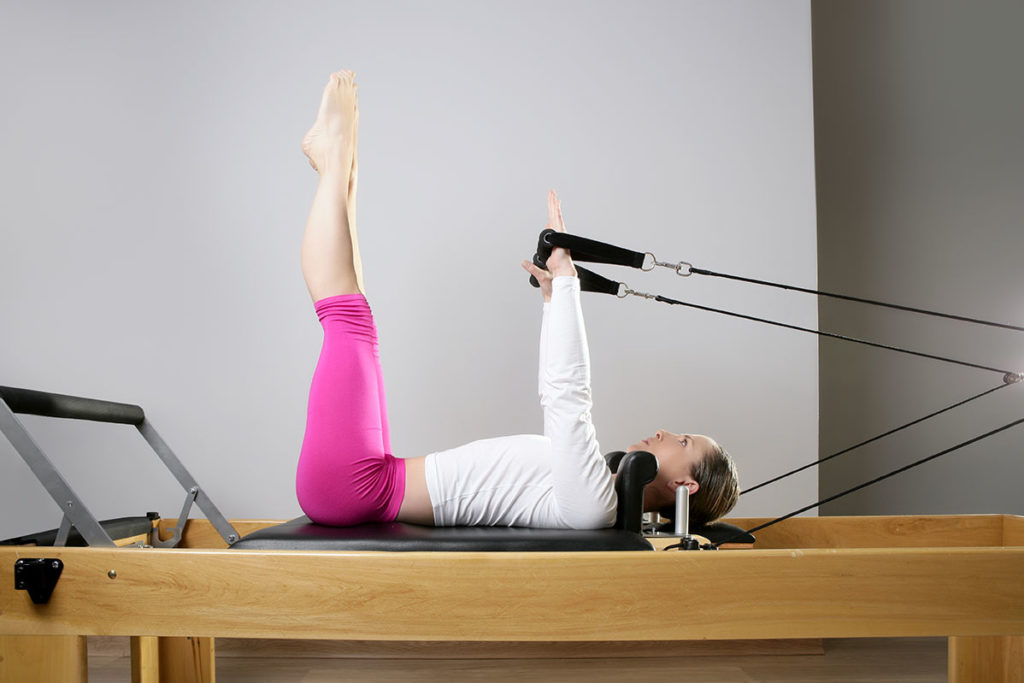
My Gravity Power Tower has long been my favorite piece of 'machine' in my studio. I owned its predecessor known as Total Gym (and even better known because of Chuck Norris who advertises for it).

I recently added some accessories to it which will enable me to teach exercises that are typically done on the Pilates Reformer.

My 'MELT on Pilates' classe at the Rex Wellness Center in Raleigh started little over two weeks ago, and I am pleased all around. I sincerely hope that my participants are, too.

My approach to the teaching of the Pilates portion is very detail oriented ond progresses every Pilates exercise slowly with plenty of reminders to the participants to find the level to which they can perform. It is my goal to have my participants leaving the class without any neck or low back pain which has no place in Pilates.

Thursday, October 21, 2010 • Raleigh, NC 27612-3431

MELT and Fibromyalgia

By Karin Singleton

Yesterday, I presented MELT to a fibromyalgia support group. After a brief description of MELT, I let the method do the talking and did the MELT foot treatment with the group. We used to soft balls only, and MELT did not let me down. The participants reported that it made them feel better, not only in their feet but also up towards their lower backs.
We then proceeded to a brief demo on the foam roller where I had the participants assess their bodies first. We used the re-balanecing technique of diaphragmetic breathing, and yet again, the participants reported back to me that their bodies felt better as a result.
Obviously, the nature of fibromyalgia mandates a very gentle approach but I was happy to see that MELT is a modality which provides a viable option.

Page « first‹ previous1234567next ›last »
Contact Karin

About Me View Profile

Karin Singleton

I have been in the fitness industry since 1994, and it is my passion to help people feel and live better. Over the years my training focus has shifted more and more towards balance between mind and body. In 2009, I have added MELT to the list of programs I offer. MELT (Myofascial Energetic Length Technique) is a method through which people can learn to self-treat their connective tissue. I also teach Pilates which I like to teach in conjunction with MELT as the two modalities are very complimentary to one another. Of course, I am also very experienced in the traditional strength, cardio and core training forms of exercise including a multitude of balls, Bosus, balance boards and much more.
Follow My Updates
My Facebook Page

Archive

2013

January (2)

February (2)

March (2)

April (2)

May (1)

2012

January (2)

February (2)

March (2)

April (2)

May (2)

June (2)

July (2)

August (2)

September (2)

October (2)

November (2)

December (2)

2011

January (2)

February (2)

March (2)

April (2)

May (2)

June (2)

July (2)

August (2)

September (1)

October (2)

November (2)

December (2)

2010

August (2)

September (3)

October (1)

November (2)

December (1)

Note: The content on this blog is not endorsed or edited by IDEA Health and Fitness Association.
powered by IDEA Health & Fitness Association